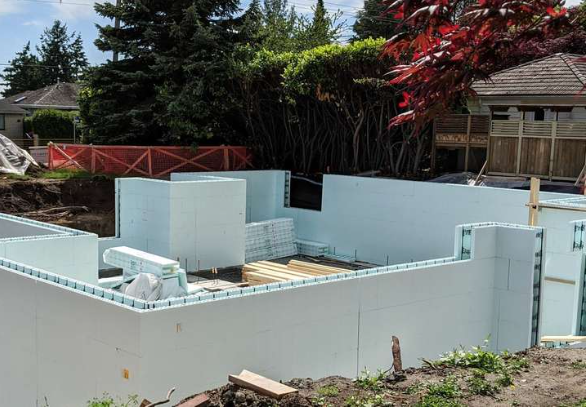
In the construction world, choosing the right building materials is crucial to the success and longevity of any project. Two popular options in modern construction are Insulated Concrete Forms (ICF) and traditional concrete blocks. This article takes an in-depth look at a comprehensive comparison of ICF blocks and concrete blocks, exploring their advantages, disadvantages and suitability for different building needs.

Learn about ICF blocks
ICF blocks are a modern construction material made of lightweight foam that serve as formwork for poured concrete walls. The blocks not only serve as formwork for the concrete but also provide insulation. An ICF consists of two insulating surfaces connected with plastic or metal straps and filled with concrete to form a "sandwich" structure.
Advantages: ICF blocks offer excellent thermal insulation, energy savings, sound insulation, and shorter construction time. They are also known for their ability to withstand natural disasters such as hurricanes and earthquakes.
Learn about concrete blocks
Concrete blocks, also known as cinder blocks or masonry blocks, are a traditional building material. They are made of cement and aggregate and formed into hollow blocks.
Pros: Concrete blocks are praised for their strength, durability and fire resistance. They are commonly used in load-bearing walls and foundations.
Comparative Analysis: ICF Blocks vs. Concrete Blocks
1. Thermal insulation and energy efficiency: ICF blocks have superior thermal insulation properties compared to traditional concrete blocks, resulting in significant energy savings.
2. Construction Time and Labor: ICF construction is generally faster and requires less labor because the blocks are lightweight and easy to assemble.
3. Strength and durability: Both materials are strong, but concrete blocks have slightly higher compressive strength. However, ICF walls are more resistant to natural disasters.
4. Cost considerations: ICF blocks tend to be more expensive initially than concrete blocks, but they can save you money on energy bills in the long run.
5. Environmental impact: ICF blocks have a lower carbon footprint due to their energy efficiency. However, both materials have environmental impacts in terms of manufacturing and transportation.
6. Sound insulation: ICF walls have better sound insulation effect and are very suitable for residential buildings in noisy environments.
7. Design Versatility: Compared to traditional concrete block structures, ICF structures offer greater flexibility in architectural design.
Deciding whether ICF blocks are superior to concrete blocks depends on the specific requirements of the construction project. ICF's advantages in thermal insulation, energy efficiency and ease of construction make it an excellent choice for residential construction. Concrete blocks, on the other hand, are a time-tested solution known for their strength and durability, making them suitable for a variety of commercial and industrial applications.